Archive for the 'Fun' Category

DIY Enlarged Photobooth Strip Print

   
Images above (left to right) Martha Stewart, Design Editor, and A Beautiful Mess

Well, another thing for the home, but I promise this is more of a designy-crafty-DIY type of a thing than home renovations. I’ve been seeing these large Debbie Carlos prints around for years, online and at renegade. I learned that blowing up your own pictures really big can make for some great artwork from all my years watching early Trading Spaces. A year or so ago people started posting about how you can get your own images blown up, in black and white, cheaply at copy stores, by just asking for blueprint or engineering copies. Brilliant!

Then a little bit ago I saw this great pin about making a life size photobooth strip from Today’s Creative Blog. I think that tutorial just pieced together 12×12 prints to look like they were all one strip, but I thought “why not take it a step further and just blow up a real photo booth strip?” I called up a local copy store and they said the largest size they print is 4′x3′ for only $5. The print is like a very large xerox and the paper is pretty similar weight to a nice copy machine paper. 4′x3′ is much wider than just one strip so I figured why not do a few strips side by side.

Working on a fun project idea. Some of my #photobooth strips from over the years.
just a few of my photo chemical photobooth pictures strips

While looking through my strips I realized I liked some pictures from a lot of the different strips and decided to piece together some of my favorites of Matt and I from over the years. I scanned 3 photobooth strips to get the background right, and then scanned all my strips for the individual pictures I wanted to place over the existing pictures. They are all real photobooth pictures, just not from the same strips. You could easily just scan complete strips and have them printed as is.

3.28.13 photobooth prints

Once again, I’m not a home decor photographer, but COME ON! Look how I was able to get two adorable kitties in the shot AND both are looking at the camera! I may have missed my calling to be a pet photographer. It’s like a family portrait of sorts above. Matt and I in the print, and the cats below. I said “too bad I didn’t remove the laptop from next to the couch” and Matt said “well, that’s part of the family too!”

A few extra ideas I had while doing this project:

I scanned the photobooth strips in at resolution of 1200 so that when they were printed out that huge they would still look pretty crisp.

The print is just stuck to the wall using wall tacky, which I’m not crazy about for the long run. I doubt I’d just find any picture frame that large that is in range for a $5 print. I need to look online for some framing ideas.

Think about what else you could print large. What about a face, Chuck Close style?! You aren’t limited to enlarging photographs either. It would be really cool to scan an object (fern leaf, needlework, heirloom lace, seeds, sequins) or photograph a sentimental object (wedding rings, baseball, keys, handwriting) you have and then blow up those images really big to display in your home.

You could get an even bigger impact by dividing your image up into parts, getting each piece printed out on the largest size paper and then piecing all the prints together on the wall.

Many years ago I remember finding the site rasterbator.net, and this project reminded me of that. I was glad to see the site is still up. Rasterbator allows you to upload a picture and then set the specifications (image dimension, as well as paper size) and the site will create a multi page PDF with your image blown up in half-tone. You can then print the pages from home and piece them together.

Last minute addition. I love this idea that MyCakies shared where she blew up a print of the Eiffel Tower and then let her children go to town painting it with watercolors. Instant Art!


Vine and video

Back in 2009 when I first got that hand me down iphone 3, one of the things I was most excited about was using video apps. Crickets chirping. Yeah, I was rudely awakened by the fact that iphone 3 did not have video capabilities. Flash forward to the beginning of this year and I got my new ipod touch 5 and I finally have video.

One of the first things I did was download the app Glmps, which I had been dying to use. I made this little video with my new record player that I got for Christmas. The app allows you to take pictures and records video and audio for a couple seconds on either edge of the photo. Unfortunately, it was glitchy and buggy and when I went to find out what was up with the app, the facebook page looked like a ghost town, complete with tumbleweeds and I’m sure it has been abandoned.

The Only Living Boy in New York
Click on image above and when image loads click on video image in corner and you will see video and hear the record.

Vine

No need to fret though, less than one month later Vine enters stage right. In the span of a day or two my instagram feed blew up with people sharing their Vine accounts. Apparently it is associated with twitter. It’s essentially the same thing, small snippets of video with audio, but it allows you to stop and start again while recording. The limited editing then allows you to change angles or locations, create stop motion, and set a scene.

I’ve made a few videos. Since I used my record player on the first glimps one I thought I would do another for Vine.

Here’s a quick video of Bishop our cat. He always climbs out on this ledge over the stairs. Sometimes when we are downstairs watching TV we will see him all the way out on the ledge watching us.

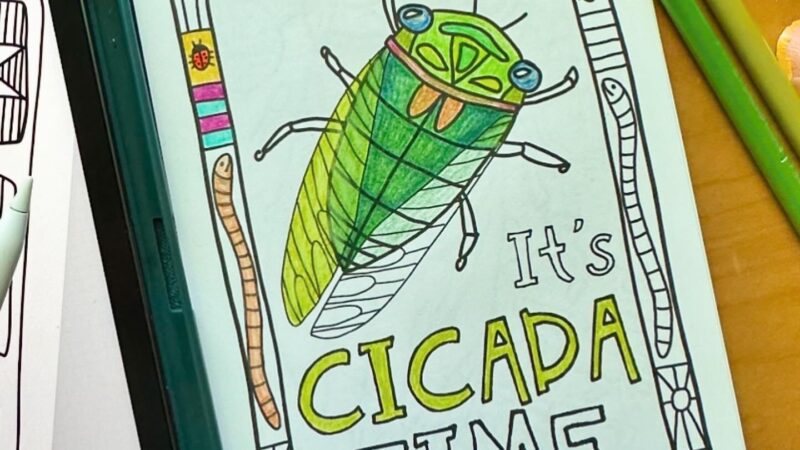
Then I created another one while I was coloring in the Zine by Silvia Chenault. I was listening to Mumford & Sons and when the album ended I went to publish the video and just then my ipod died. I thought I lost it forever, but I was thrilled to just find that it actually had saved it to my photo album before shutting down. All cut the way it is, it makes the music sound like I’m listening to something being played backwards.

It’s fun to make your own quick videos to share, but it’s also fun to watch other people’s little videos. Amy Johnson of Maker Mama did a post this morning of 10 tips for using Vine.

I’ve seen a few different posts online lately about the importance of video for your online presence. Back in 2010 “create 5 gifs” was on my yearly list of things to do, and you can see them all here. I’ve often thought that I should make a little video for my recycled stationery sets that are in my shop. I think they have an interesting story, how they are made and what they are exactly. I’ve had a few people express to me that they weren’t sure exactly what my recycled stationery sets are and I thought a video might clarify everything. At any rate, I’ll just add that to my mile long list of things to do someday when I have all the time in the world.

Tiny Notebook Club

2.6.10 book closed

I’m not sure how I first heard about Tiny Notebook Club, but as far as I can tell it’s started with an instagram account asking people to post pictures of their creativity inside of tiny notebooks. People choose to post images of their writing, collage, paintings, drawings, what have you, in tiny notebooks and hashtag their images with #tinynotebookclub. On Monday the administrators pick 4 images to feature in their feed. It sounds like they are just getting started out, and have plans for a website to expand the project. I have my little green book from Green Trike Press and found this project the perfect prompt for me to work in it again regularly.

Here are my contributions so far. Let me know if you join in on the fun.

Monday Morning Inspiration

After getting my Zutter (spiral notebook binder) I had the idea to create some original patterns to have printed and use as covers for a series of notebooks (staplebound as well as spiralbound). Here are the instagrammed patterns I’ve created so far.

Painting a pattern for a project I have in mind
Robyn Fun Fact: I paint (watercolor and acrylic) with a hair dryer nearby because I'm too impatient to let layers dry.
An idea I had in my head
Another pattern for my potential project #art #pattern #stripes #beautiful #wip #watercolors

I’d like to eventually make a whole bunch so that I have a collection from which to choose the best.  I would be remiss to make this post and not mention the inspiration I have been receiving on instagram with Anika’s #patternaday. I love all the patterns people are sharing.

Spiral Book Binding, Woot!

11.13 notebooks

Last week I saw a picture of some spiral bound notebooks somewhere online, and it sent me on my usual hunt to find spiral book binders at all the usual office supply websites. I have wanted my own ever since freshman year of graphic arts in high school. I’m pretty sure we had two machines, one was for normal spiral binding (yay) and the other was the comb binding (blech, books never open well and pages don’t lay flat). I’ve found plenty of machines online, but I’ve never gotten to the serious stage of actually price comparison or reading reviews. When I started my search again last week I suddenly had the idea to check the Etsy forums and sure enough, I found a thread where everyone was raving about a model that can be bought at Hobby Lobby. I love me some Hobby Lobby, but is a craft store going to carry a worthy book binder? After a little bit more research I see that the binding looks good, and oh, it only costs $60! 40% off coupon and it’s basically a steal.

Enter the Zutter Bind-it-all

There are plenty of videos on youtube showing you how to use it and provide creative project ideas. I’m remembering some awesome little notebooks I’ve purchased at Renegade in the past and now realize these were probably also all made with the Zutter. It can bind books with covers made from cardboard, wood, and I even saw a video where they were cutting through plexiglass.
I made my first spiral bound book!
At the first opportunity I went to Hobby Lobby and picked one up for myself. I immediately got down to business and with my mom and sister we made the first little book, using an assortment of papers. The next day I went crazy and made all the little notebooks in the top picture,

11.13 grass book
this charming little grass journal (it had to be done),

11.13 books
and then of course I had to see how tiny I could go. I was able to make these little notebooks that will fit inside the capsules for my gumball machine.

11.13 spiral 11.13 punches

Zutter offers a variety of spirals, and oh look, the machine punches your paper and yay, confetti!

The Zutter is a success!

12 hour Craft Extravaganza and Fall Leaf Garland

This weekend was the 12 Hour Craft Extravaganza that my sister’s church organizes. It was my second year attending. Some may think “12 hours of crafting!? How can you stand to sit and craft for that long” but really, it goes by soooo fast. Both years I have brought so much stuff, thinking I’d accomplish so much, and in the end realize you would need several more 12 hours to finish it all.
photo.JPG
I’ve been working on this origami project where I will need about 150 origami lilies. I worked on it for 2 hours that day and I think I only finished about 10 lilies. I timed myself and if I’m focused and work straight through it takes between 6 to 7 minutes to fold one lily, not including curling the leaves. This means there was a lot of breaks and chatting while working. I had gone in thinking I might be able to finish all of the pieces, yeah right.
photo.JPG Paper flag bunting tutorial
Next I worked on some bunting. I had been wanting to make some washi tape bunting for a while, so I did that. It wasn’t as quick and easy as I had imagined. I also made some of my regular itty bitty bunting for my etsy orders.

This happened today

My big project were these leaves above. They were inspired by a post on Alisa Burke’s blog where she painted right on leaves and made a garland. I can not remember the original source, maybe craft magazine or craft gawker? There was the Martha Stewart DIY about dipping leaves in wax to prolong their colors. It makes me think of ironing leaves in wax paper during elementary school, but with dipping you get the beautiful and dimensional leaves alone, not stuck together, hidden between papers.

  
Alisa’s leaves on the left, Martha’s leaves on the right.

The leaves have been falling and I remembered these crafts that I had pinned…

photo.JPG
so I gathered as many different colored and shaped leaves as I could find.

photo.JPG
A fellow crafter at the event told me about a tool she had and then ran home real quick to bring it back to me. It’s called the Micrfluer and allows you to press and dry leaves in the microwave in about 45 seconds. Not only is it speedy, but it also retains the color much more than pressing the leaves in a book. In the picture above you can see the two green leaves. The one on the left is pressed and dry, while the one on the right is still curled and wet. As it turns out my sister also has one of these tools so she lent it to me.

A couple cool things about the Microfluer: Once you have the tool that is all you need. You don’t need to keep buying replaceable parts that get used up with every pressing. Also, after you dry the leaves they remain fairly  flexible, unlike leaves dried in a book which become brittle and crumble apart. The woman who lent me the contraption even had some leaves she said were 8-10 years old and are still perfectly fine!

photo.JPG

Next I painted bold patterns on my leaves with inexpensive acrylic craft paint. If you didn’t want to press or dry your leaves you could just paint right on newly fallen leaves like Alisa did.

photo.JPG

Then because I’m a craft addict, I just happen to already have a little crock pot devoted to wax, so I just warmed it up and started dipping. I was worried that the paint might come off, but it didn’t. The leaves kind of regained some curl when I pulled them from the wax. I just let the wax drip off and then set it on a plastic sheet when it was mostly cooled and pressed it between pages in a book, and they flattened again quickly.

With the dried leaves, the paint and then wax, I think these leaves will be safe and protected for a long time. As long as I am careful to store them safely each year I should be able use them again and again as a fall decoration.

10.23. leaf garland close up

Originally I wanted to tie the stems with a string, like in the Martha Stewart diy, but hang them across, in a garland like the Alisa Burke post. When I went to attach the string to the first leaf I quickly realized it wasn’t going to work when the leaves would keep turning every which way, not laying flat or parallel to wall, AND THEN while trying to straighten the string on the stem so it would lay properly the stem broke right off. When I returned home I punched two holes in each leaf and fed a string in and out to create the banner as you can see above.

While I was working I thought this would be a great project for my sister in law and 2 year old nephew to do together. He could paint on the leaves and then she could hang them as a fall decoration. He could just paint randomly, as two year olds do, and that would be beautiful. Each year he could do more and have his name and age painted on the backs of the leaves so the garland grows over time.  I also had the idea of either masking letters on each leave while he paints over it then revealing a word or phrase when you peel away the letters and string the leaves together.

We got to play with our crafts, enjoy great conversation and were treated with delicious meals.  It was a great second 12 Hour Craft Extravaganza and time flew by.

Miniature Garden

I just saw this DIY on creating a moss photography background via the Craft Blog, and it reminded me of the dried sheet moss I used recently on my own miniature garden.
I was just looking through my blog and realized I never posted about it back in 2010, and since I just redid the garden, slightly, I thought I’d share it here.
finger hat man
Background… I’m pretty obsessed with things in miniature, and have been since I was a kid. I’m pretty sure that watching the Littles as a child had a lot to do with it. A lot of my pretend play centered around tiny people and animals, so of course finding small things that I could incorporate into that was great. I didn’t get a doll house until I was probably in middle school, but I still have it, along with all the miniature furniture. I remember my mom being wowed while packing it up once and finding all sorts of miniature things in it that I had made like tiny bowls of yarn and miniature knitting needles, along with tiny newspapers, etc. When I was in college I used to subscribe to a few literary/art/photography magazine/journals and (I wish I remembered who the artist was) but there was a feature on a photographer who built little “fairy houses” out in nature, made from nature (twigs, bark, rocks, etc.) and then photographed them. That was one of those “I wish I had thought of that” moments. I also liked imagining other people finding her sculptures afterward (possibly children) and wondering what they were all about. It was like Andy Goldsworthy but way before I’d ever heard of Andy Goldsworthy. Of course the miniatures at the Art Institute in Chicago were always a favorite. As an adult I’ve attended a couple of Miniature Shows (Tom Bishop) and naturally, I have a miniatures board on pinterest.

7.17.10 miniature garden

My sister signed us up for a miniature garden class at her local nursery, The Growing Place. More than two years ago, sheesh, talk about a late blog post. I had always wanted to make a little miniature garden, but just assumed that the class would be teaching us how to make one at our own home and then sell us little plants that would be suited for our own miniature gardens. I was delighted to find that we were actually building our very own gardens right there, ready to take back home. They had a variety of containers to choose from including old vintage dresser drawers! How clever, right? I built my little garden (above) but was kind of horrible about taking care of it. Since it was just in a drawer I had it on my front porch or patio, just sitting on the cement, so it was low and overlooked. It wasn’t until moving into our home last year that I found the perfect little nook for the miniature garden, near our front door, but once again it was just on the ground. By then the plants were all dead and I didn’t replace them. Finally I had a great idea that I should put legs under my dresser drawer and lift the garden up, like a table, so that it could be seen.
miniature garden at Bloomen Gardens in Sycamore
It wasn’t until last week when visiting our local nursery (Bloomen Gardens) that I remembered that plan. Turns out they have a whole little miniature garden section there as well, and their gardens are on table tops, pictured above.
10.17 little garden2
I left the nursery on a hunt to find something that could lift my “garden drawer” up and found just the thing, a little bench, at a resale shop for $6. I went home, lifted up my sad little garden and realized that it needed some desperate TLC. It’s a little late in the season to be buying plants but I remembered a bag of sheet moss I had purchased for little terrariums, so I brought it out and rearranged it a little bit.
10.17 little garden
I remembered a white picket fence I had picked up at Michael’s (I think) and dropped int into place real quick. I also remembered some bags of miniature items (garden statues, garden pots, watering can and stepping stones) I had bought years ago at the miniature shows, for when I finally made my little garden. The little bird house that I have in there definitely needs a coat of paint and when spring hits I’ll hopefully be able to put in some real plants again, as was pictured near the top. All the same, I’m glad that it is lifted off the ground and people can enjoy it when they come in and out of the house. I’ll continue to keep my eye out for miniatures that I could add to it.

Impossible Film

For my birthday my brother and sister bought me a SX-70 Land Camera. I have a fairly large polaroid camera collection including a one-step SX70, but not the SX70 Land Camera so it was a great addition to my collection. I was really excited to try it out and buy my very first Impossible Film. One thing I learned from Tiffany during her Polaroid Image Transfer class was that when the Impossible Project purchased the last remaining Polaroid Factory to try and save instant film, they only got the building and machinery, but not the chemistry, materials and instructions. Impossible Project had to start from the ground up, with the help of a few previous Polaroid employees, they had to redevelop an instant film of their very own. So Instant film is NOT Polaroid film at all. They’ve had to go through the exact same learning curves that Polaroid had when they first started out, such as light and temperature exposures, etc. How cool is that?

I got my first pack of Impossible film a couple weeks back but have been a bit afraid to take the leap. When you purchase the film they send you many instructions (via email, with your receipt and inside the film box) that there are extra steps compared to your standard old-school polaroid films. Number one being that you need to shield the film as it comes out immediately. They actually sell shields and bags to protect your image from light. I figured I could just rig something up myself and I thought I was pretty clever while patting myself on the back about it. I read reviews where people complained about wasting so many pictures before figuring it all out. I thought “I’m not going to waste ANY pictures.” Haha, yeah right.

first 3 impossible film

Here are my first 3 pictures (L-R in order of taking them). The #1 picture I took was of Bishop (if you look you can see him in there) and it got jammed because of my handmade cover prevented the picture from coming out. I think it was folded in 3 with just a little tab sticking out. I couldn’t get it out and the only way it came out was by taking another picture, wasting #2. #2 even had some chemistry on it that had shot out of the first picture when it jammed. So, I goofed up. I realized I need to not use my homemade cover and just shield the picture the best I can while it comes out. So I tried again. I’m not sure if this is how all of these cameras work, or if it’s just mine (or maybe the film), but apparently when I take a picture it sits for a few seconds and then the picture starts coming out. I wasn’t sure if that meant it was exposing the picture immediately and then delaying the spit out, or if I press the button and then the camera lens is open for seconds at a time? For #3 I took the picture and because I was in such a hurry to protect the image I immediately spun into action, and apparently the camera wasn’t done taking the picture because I got that fun little dotted light blur. Fun, yes, but not what I was aiming for.

4th impossible film
Finally this morning I decided to take a picture with the camera outside in good light. I got the focus just right, took the picture, shielded it and ran inside to develop it in the dark for 40 minutes. The instructions say the most important shield time is for the first 2 seconds, but that it continues to develop for 45 minutes or so, so I kept it in the dark the entire time and this is what I got. I had the focus on the horse’s face really crisp, so I’m not sure if that it is result of my camera’s focus being off, me still rushing it a bit when taking the picture, or the exposure time being long and thus my hand being unsteady for the duration of exposure.

Lesson learned. Everywhere I read, they said Impossible film is a finicky product and takes some time to master and as usual I laughed and blew off warnings, thinking I would be able to handle it. I’m now on picture #5 and I am having fun playing with it. Hopefully by the end of this pack I will have at least a couple pictures that I really like.

Impossible Project has film for several different Polaroid cameras, including 600, which is the pretty standard size camera people had before Polaroid shut down.

One last thing about Impossible film… as long as people keep purchasing, using and supporting their products they will continue to experiment and develop instant film. I had fun supporting Impossible finally and look forward to doing it again in the future.

Drawing, sketching, doodling

DSC_1068
Ever since I’ve worked in an office I’ve always had plenty of scratch paper around. Paper that would normally get recycled or thrown out I collect and then cut down into quarters for scratch paper. I have a thing for this paper. Even though I pretty much carry a sketchbook or cahier with me everywhere, I still find myself hoarding this scrap paper like it’s some hot commodity. On any given day you can probably find several of these pieces of paper randomly in my purse. I write notes to myself and compose to-do lists on scraps. I also like making little staple books and fill the pages with drawings, sketches and doodles and random quick artwork. I realized I haven’t done that in a while so a few weeks ago I figured if I drew one page every day I’d have a nice little book when it was done.

The little book is finally complete and so I thought it would be fun to create a little animated gif leafing through it.
P.S. I think this completes my goal for 5 animated gifs.

DSC_1068

Below are some of the still frames so you can see more detail
DSC_1069
DSC_1073
DSC_1094
DSC_1096
DSC_1098

Meanwhile, when I was doing a page everyday in my little staple book I started noticing other people sketching, doodles and drawing as well.


During August Anika (from aisforanika) started posting a doodle a day on instagram. This month she is doing a pattern everyday. Follower her on instagram (aisforanika)

While doodling I started thinking about Danny Gregory and how he advocates drawing every day. I hadn’t thought about it for a while, but there’s a long list of things to draw everyday, inspired by his book Everyday matters. You can see the list here, and #1 is to draw a shoe. Naturally one of the pages in my little scratchbook is my shoe.

Blair Stocker is participating in a group blog with her family where they upload their sketchbook pages everyday.

Summer Pierre decided to do one of her One Page Stories everyday for 100 days. Yes. ONE HUNDRED DAYS! She’s on day 11 and I’m enjoying them so much.

Then, inspired by Summer’s commitment and (I suspect) not to be shown up by Summer ;) dear friend Rosa Murillo is now doing a drawing everyday for 100 days as well! I’m in heaven.


Then earlier this week Silvia Chenault posted this BEAUTIFUL and COLORFUL drawing from her sketchbook using prisma markers. It was perfect because I too had just splurged and bought prisma markers in a variety of colors. I had been using the gray markers on the first few pages and then wanted to add color. I’m always inspired by Silvia.

Fuji Image Transfer

Tiffany Teske is a superstar and has been featured and published in several magazines. One of those publications is Cloth, Paper Scissors and in the Nov/Dec issues from last year she was featured sharing her processes for fuji image transfer. As I explained yesterday, I have long wanted to explore emulsion transfer lifts and signed up for one of her image transfer classes thinking that is what we would learn. Last minute I realize that it wasn’t emulsion transfer after all, but as fate was working on my side, the class ended up touching on emulsion lift (enough to figure it out and do on my own later) AS WELL AS learning an entirely new-to-me technique that I think is a bit more involved and interesting than emulsion transfer, so I really lucked out. BOTH techniques ended up being something that I could do at home on my own, and didn’t even know it before.
polaroid colorpack II land camera
The image transfer and emulsion transfer techniques were something that was originally done with Polaroid films. Not all Polaroid film can do this and that was what prevented me from trying it myself at home. Since Polaroid has stopped production on their instant films, Fuji (and The Impossible Project) have picked up where they left off and started producing many films that can fit in Polaroid cameras. When people think of Polaroid film nowadays, they mostly think of the point and shoot and pop out pictures that develop in your hands, shake it like a Polaroid picture! But these are, for the most part, not the types of film you would use for these techniques. Land Cameras like the one pictured above and below, that take pack peel apart film. Fuji now produces 100 film that will fit Polaroid Land cameras. This is the type of film we used for the class, and can be used for both image transfers as well as emulsion lifts.
P1010405
It wasn’t until the class that I realized that this camera and the film I had been buying already, would work for the technique I’d been dying to try out. Sometimes when I feel really dumb I picture myself, walking down the sidewalk, whistling a happy tune, joy in my heart but not a brain in my head, when suddenly from out of no where a brick comes flying at me and hits me in the head, wherein a trip to the ground. Finding out that I could do emulsion transfers with a camera and film I already had on hand felt like that. Long ago, after reading up on the emulsion transfer lift process and realizing it was a camera and film I didn’t have access too, I just since imagined it was one of those really obscure things that probably also died with Polaroid.

I’ll quickly describe the techniques, but if you are interested to tack a crack at this yourself I’d encourage you to purchase a back copy of the Cloth, Paper Scissors where Tiffany shares her techniques, or just peruse the internets. There are fabulous tutorials and videos out there now. Yeah, if only I had thought to do that myself in the last 5 years, doh!

For the class we did not use cameras, but instead brought our own developed photographs and then Tiffany introduced this amazing machine called the Daylab Copy System Pro. It allows you to place any image on  a glass flatbed, load the pack film, and with mirrors and a flash, transfer your image onto the pack film. If you had a camera that loaded the pack film then you could do it straight from there. Normally, after an image is transferred to the film you would wait, then pull apart the film and negative/chemical side and find your photograph fully developed. In the image transfer technique you do not allow the film to develop to the photograph, and instead peel them apart immediately and place the negative/chemical side onto a porous surface where you want your image to transfer. For emulsion lift, you use the same exact film, let your pictures develop and soak them in VERY hot water until the “emulsion” with image separates from the backing paper. It is transparent and more plastic and durable as compared to polaroid which was more gel like and would rip and tear easily.
P1010406
During the class I was able to do about 10 transfers and I would say it is definitely something that takes practice, but is fun. The transfer image is more rugged and rough, so if you are looking for a pristine image this might not be the technique for you. Also, depending on your timing, as well as paper quality and texture, etc., your image can turn up wildly different. I do like a weathered image, but I also realized I had a harder time trying to accept that my images didn’t resemble my original closer. I loved everyone else’s grit, but had a hard time accepting that my own was “good enough”. I think this was because I chose pictures that I had taken and that were somewhat already close to my heart. If I was working straight from a camera, I’d never really know what the original would have looked like. I have so many ideas I’d love to explore more, like double exposures and writing and drawing on the surface of the paper before transferring the image. I would also LOVE to get my own Daylab. I’ll have to keep my eye open on ebay as well as at the flea markets and garage sales. I’m sad to think I might have even passed one of these up recently because I didn’t know exactly what it was.
P1010407

The above two photos are examples of image transfers that I did in class. The image on the right pages are the originals that I brought in, the bottom pictures on the left are the photos developed on the fuji 100 pack film (they should be fairly light because most of the chemistry should actually end up going into your image transfer) and then the top left images are my image transfers on watercolor paper.
So this happened today - fuji image transfers with Tiffany Teske
An instagram of the image transfers I did in class.

The class was great. I had fun experimenting, and learned way more than I expected… such as… did you know that the Impossible Project purchased the Polaroid factory that they work from, but not the chemistry, or instructions to create Polaroid film. They’ve had to hire their own chemists and have to figure things out for themselves. This is why Impossible Project film has to be protected from daylight when first developing, just like early on Polaroid film did. This is because they are working out the kinks on their own, just as Polaroid did when they first started out. Impossible Project film is not Polaroid film, but their own unique formulas. I find that fascinating.